

Converting visitors to your website into qualified leads is one of the most difficult challenges you face as a site owner. There are thousands of tools to try to manage it, and one that has stood the test of time is HelloBar.
Used by over half a million websites, including many big names, HelloBar is powerful. Unfortunately, it can also be costly, and there are a few drawbacks, including the limitation on views per pop-up and the price.
So, if you’re looking for lead generation tools that work, but HelloBar doesn’t fit the bill, what are your alternatives?
What HelloBar Does
First, let’s look at what HelloBar does, so you have a basis of comparison with the alternatives.
The eponymous “Hello Bar” is a header bar that displays a call to action. It was their first offering and the one that made them famous, and everything else has been added over time.
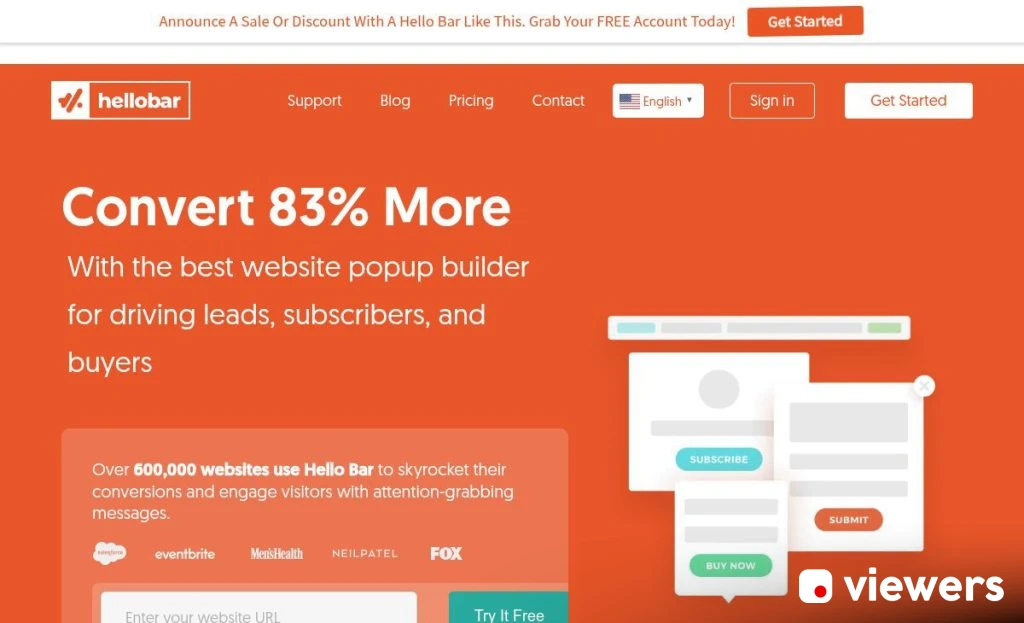
Today, the core function of HelloBar is a variety of pop-ups, pop-overs, slide-ins, and other kinds of non-content displays that prompt a user with a call to action. Some can be immediate and persistent, like the header bar; others are time-based or action-based like the ever-popular exit intent pop-over.
Specifically, HelloBar offers:
- Header Bars
- Footer Bars
- Modal Pop-ups
- Corner Alert Boxes
- Slide-In CTA Boxes
- Full-Screen Takeovers
All of these link into back-end systems for lead generation. If you’ve spent any time on the internet in the last ten years, it’s pretty much guaranteed that you’ve seen some version of all of these.
HelloBar also offers some targeting options, using location, time, referral source, and more. Their data is populated in analytics with custom reports, and they offer split testing for optimization purposes.
Different tiers of pricing for HelloBar primarily change the views-per-month limit on these widgets. They have four tiers:
- Free, with a 5,000-view lifetime cap.
- Growth, for $30/month, giving you 50,000 monthly views.
- Premium, for $50/month, giving you 150,000 monthly views.
- Elite, for $100/month, giving you 500,000 monthly views.
Most other features are identical across the plans, with only minor differences. Free doesn’t get split testing, only Premium and Elite get priority support, and email integrations differ per plan.
Why might you consider an alternative rather than just using HelloBar itself? That’s a personal decision. I know some people who have had technical issues with it. I know some who want more extensive features or displays that HelloBar doesn’t offer. I know some people who just don’t like Neil Patel and don’t want to use his services. Honestly, it doesn’t matter much why you want to switch. I’ll discuss my recommended alternatives, and you can decide which ones fit the bill for you.
15 Alternatives to HelloBar
Since the core features of HelloBar are pretty simple, dozens of companies have replicated them in their own way. I’ve used a lot of them over the years, and the fifteen I’m mentioning here are all ones I’ve found worth using. I’ll mostly be mentioning a few core details of what sets these apart, and you can browse their features or look into dealbreakers yourself.
Also, despite the numbering, this isn’t in a ranked order; all of these widgets and platforms are good in their own ways, and finding the best fit for you, rather than the best in general, is the ideal choice here.
1: OptinMonster
One of the oldest and most robust of the alternatives, OptinMonster has a wide range of widgets and tools for websites, ranging from cart abandonment tools to automation to analytics.
The most comparable widget to HelloBar is their Form Builder, which is a drag-and-drop customizable form creation app. With it, you can choose a base template (like the pop-up or slide-in) and customize what’s in it, how it displays, and how it looks.
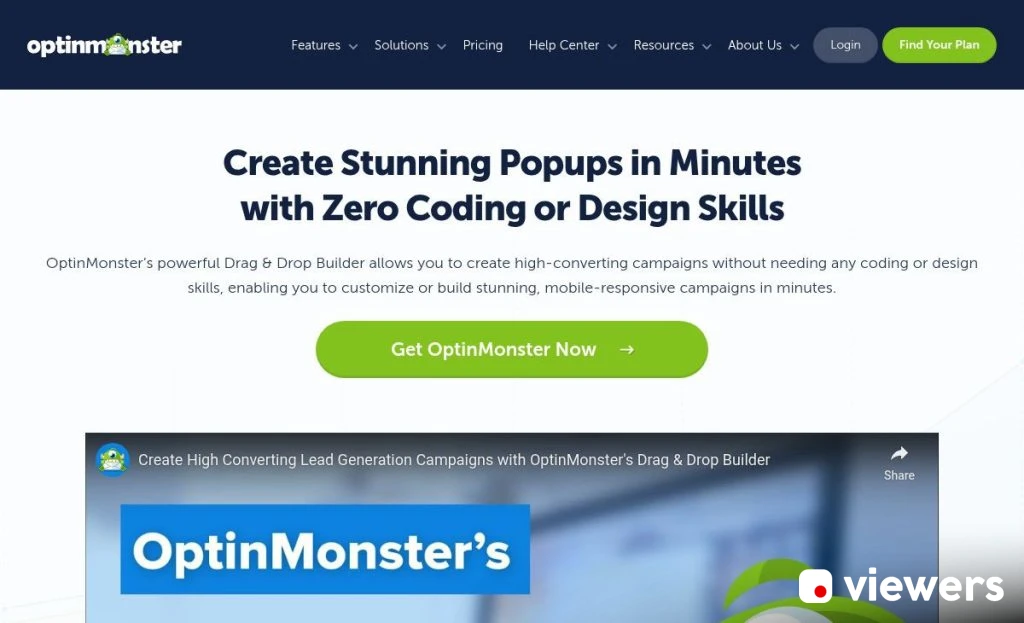
OptinMonster is probably among the best on this list when it comes to audience targeting and dynamic display. It also has a thousand other features besides, and even their top-tier plan is less comparable in cost to HelloBar’s mid-tier plan, at least with their first-year introductory offer.
The main downsides are the sheer number of options, which can make it feel like you’re not using the tool to its fullest, and some nagging when you aren’t using the top-tier plan.
2: HubSpot Marketing
HubSpot is one of the biggest names in marketing tools. They’ve been around forever and have platforms to do pretty much everything, up to and including running your website entirely.
For lead generation, you’re looking at the Marketing Hub. That’s where you find the form, email, live chat, and similar marketing tools.
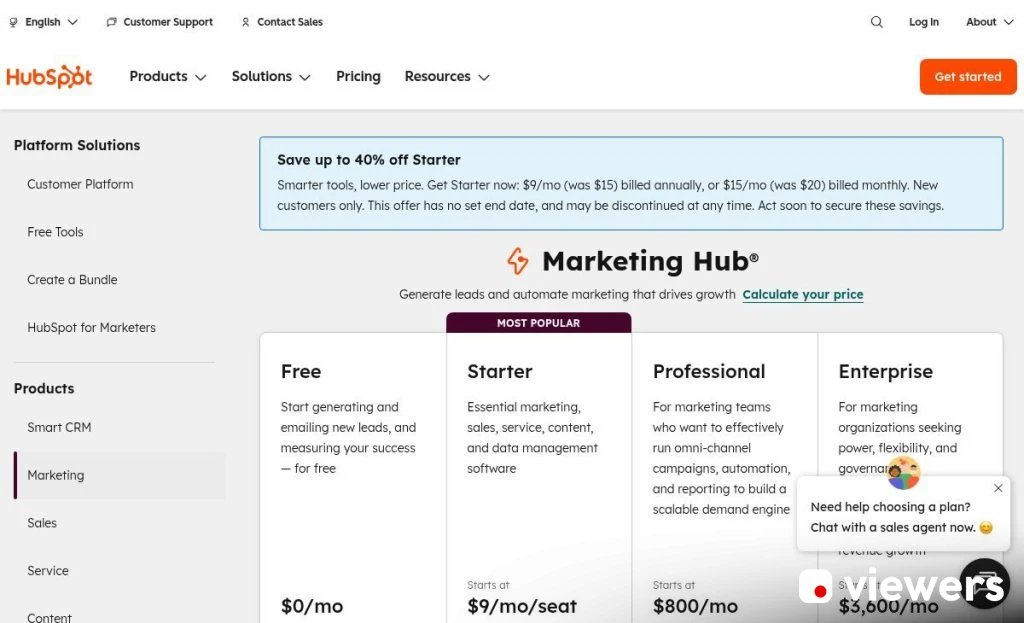
HubSpot is very likely the most powerful app on this list, but with a significant caveat. The affordable version, at $9 per month, is very limited and is essentially an upgraded version of their free tools. If you’ve ever used their free tools and wanted to use them without the HubSpot branding, this is the package for you.
The jump to the high-tier package, though, is solely meant for enterprise customers. The Professional plan, which is the cheapest of their higher-tier plans, is $800 per month.
3: Elementor
Elementor is a robust set of tools primarily made for WordPress. That makes them ideal if you’re like me and love WordPress, but if you’re invested in another platform like Magento, Joomla, or Shopify, it’s not going to work for you.
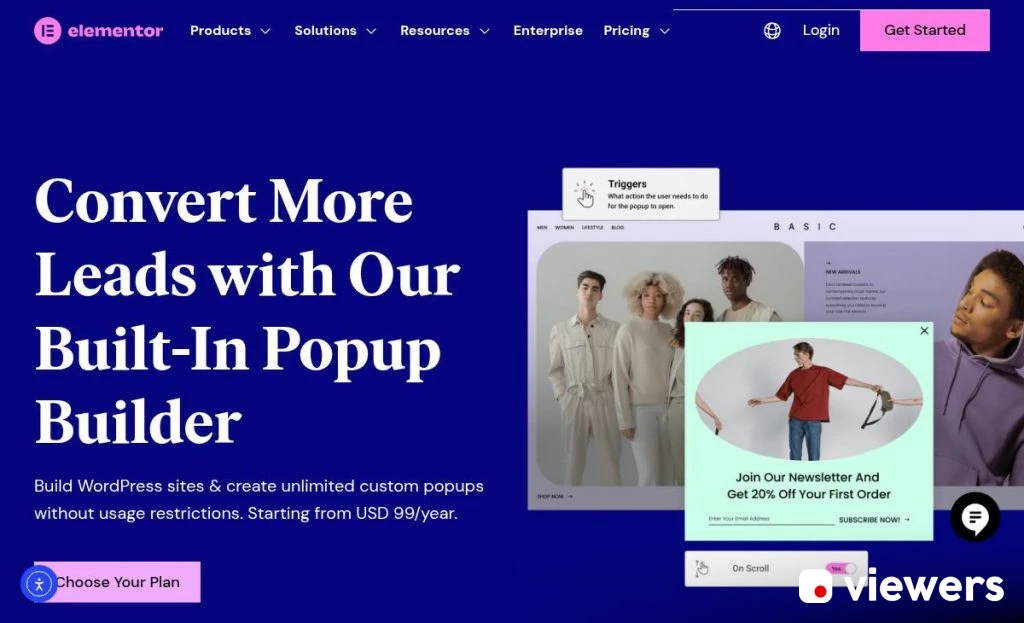
Their pop-up builder is very simple. It’s a three-step process where you pick the conditions for a pop-up to appear, choose triggers for it to open, and set advanced rules for how it works, if it times out or stops appearing for repeat visitors, and more.
The pop-up builder is part of their Advanced+ plans, which start at $7 per month, and come with over 86 other widgets, tools, and more. It’s an extremely affordable option for small businesses and WordPress sites looking to grow.
4: WPFront Notification Bar
Another WordPress-exclusive option, this one has the added benefit of being a completely free plugin. The downside is that it’s very simple for it. You can have it run a script or open a link, you can put it at the top or bottom of the page, you can set how many seconds before it appears and disappears, and that’s about it.
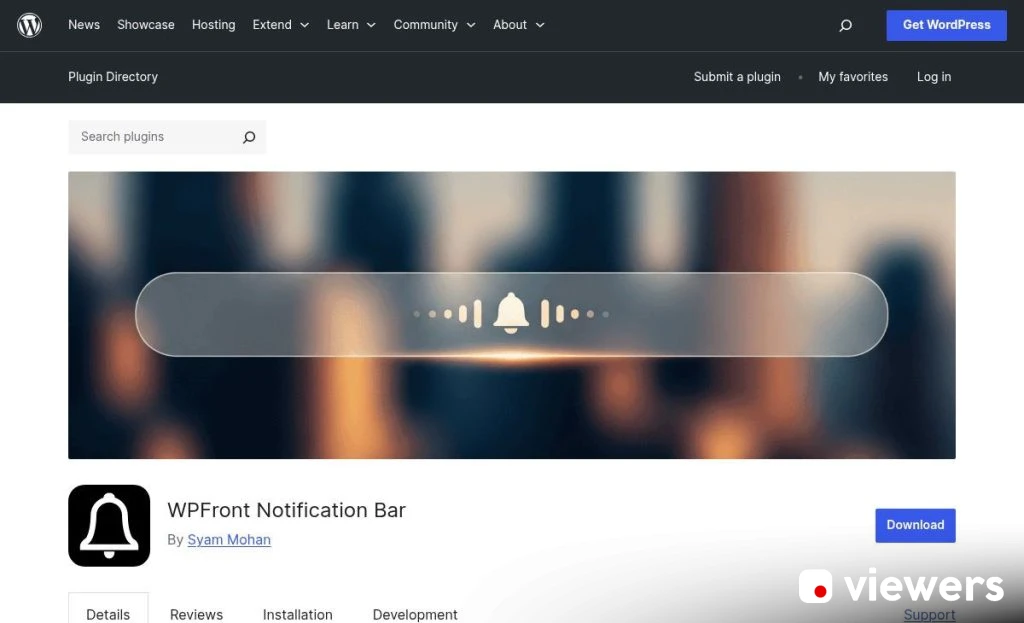
If you wanted to use HelloBar as informative or as a link to a landing page or other function, this plugin is a great alternative. If you wanted a direct link into email sign-ups or other CTAs, you’re not quite going to get it here.
There are plenty of other WordPress plugins for similar features, with slide-ins and pop-overs and other CTAs, but for a simple header bar, this is probably the easiest and most lightweight option available.
5: Picreel
Picreel is very business and conversion focused, which makes it great for marketing. It comes with over 100 templates and all of the core features you would want out of a pop-up CTA engine. You get lead capture forms, lightbox pop-ups, multi-screen pop-ups, overlays, and a lot of different forms for the lead generation boxes.
You also get some options you don’t get with HelloBar. If you’ve been on a store and seen a “spin the wheel for a discount” widget, this offers that, for example.
Like HelloBar, Picreel is capped on views per month for their paid plans. $10/month for 50,000 is the base price. Unlike HelloBar, the enterprise plan for Picreel is unlimited views, and costs $70 per month.
The main downside is that white labeling is an extra fee no matter which paid plan you use, and it’s an extra $25/month just to remove the “powered by Picreel” link on your pop-ups.
6: Impulse
Formerly known as Plum, Impulse is now an AI-driven company that offers 40+ different marketing apps. Some of these aren’t relevant to today’s topic, like the estimated delivery date, size chart, or store locator apps. Others are, like sales pop-ups, exit intent pop-ups, countdown timer bars, and similar CTAs.
The main downside is the caps on usage. While apps like Picreel and HelloBar have monthly view caps, they’re relatively high. Impulse’s starter plan, at $10/month, is only 500 monthly views. Even their top-tier Expert plan, which runs at $80/month, is 150,000 views per month. It’s really easy to burn through those caps for a moderately popular store or blog and not have much to show for it.
7: BDOW
Sumo was a powerful app for pop-ups and notifications, but they had a bit of a brand name problem, especially with other top-tier marketing tools like BuzzSumo adding to the confusion. Sumo rebranded to BDOW! to stand out. Is it a good rebrand? That remains to be seen.
BDOW has pop-ups, scroll boxes, smart bars, click triggers, inline forms, an da whole bunch more. They have a ton of templates, a lot of robust targeting options, and FOMO-inducing timers, countdowns, and other triggers.
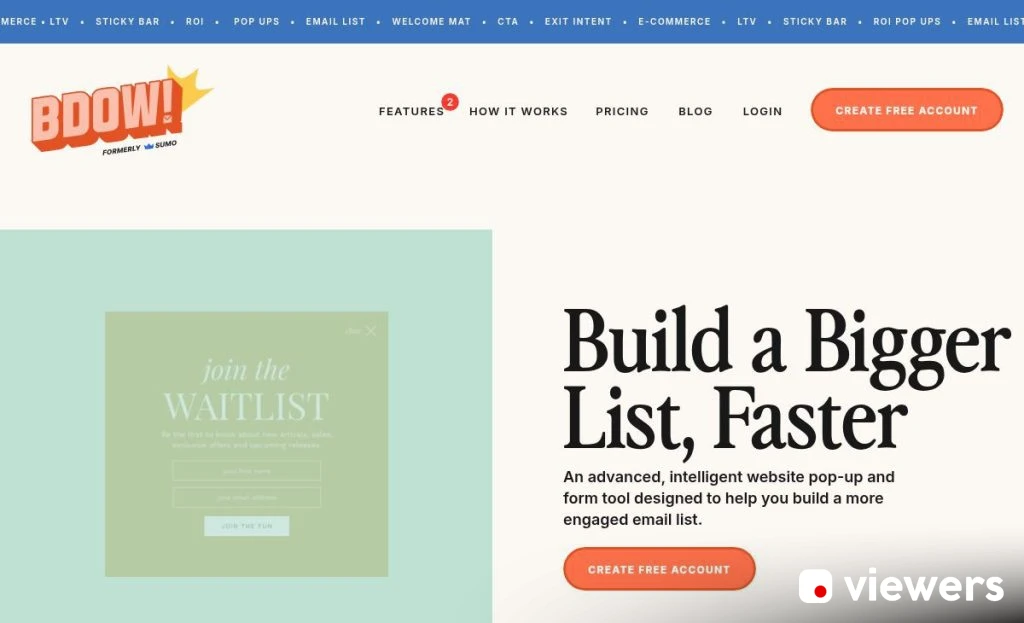
Their free plan is not limited by pageviews, but by conversions, with a cap of only 100. The paid plans start at $20 per month and give you 25,000 pageviews. The Pro plan is $40 and has the same cap, but allows you to put it on up to three sites. The tool also does email sends and has a cap for those as well, along with some ecommerce features and analytics that come with the paid plans.
Overall, since both paid plans have a fairly low pageview cap, this is firmly a small business tool to me.
8: Poptin
Poptin has a full suite of CTA pops, including full-screen, lightbox, header and footer banners, slide-ins, countdowns, surveys, and more. They also have form-specific pop-ins for contact forms, simple yes/no feedback forms, and customizable advanced forms.
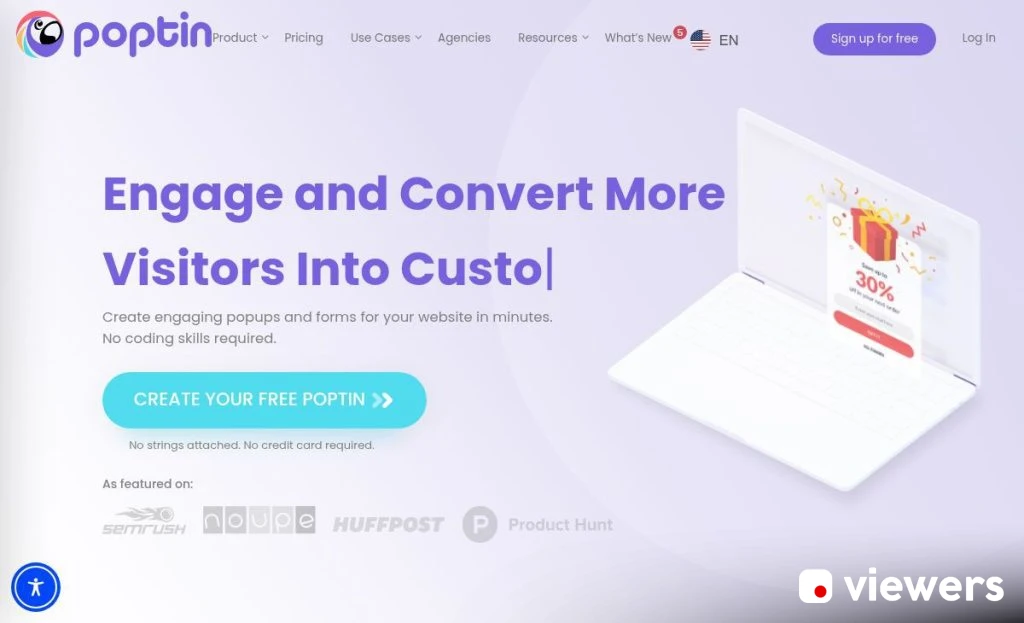
Where the app really shines is with secondary features, like the ability to use segmented lists, add smart tags, and use third-party conversion codes in your pop-ups. They also have pretty robust targeting for their pops, including ad-block detection, cart targeting, script targeting, and basic time/source/location targeting.
Pricing is about on par with other options, with the cheap plan starting at $20 per month for 10,000 pageviews for your pops.
9: ConvertFlow
Billing itself as a complete funnel builder powered by AI, ConvertFlow is a full platform with pop-ups, landing pages, header bars, quizzes, surveys, forms, and more. They have tons of integrations, hundreds of templates, and even the option to add a bunch of extra website-focused testing and tracking.
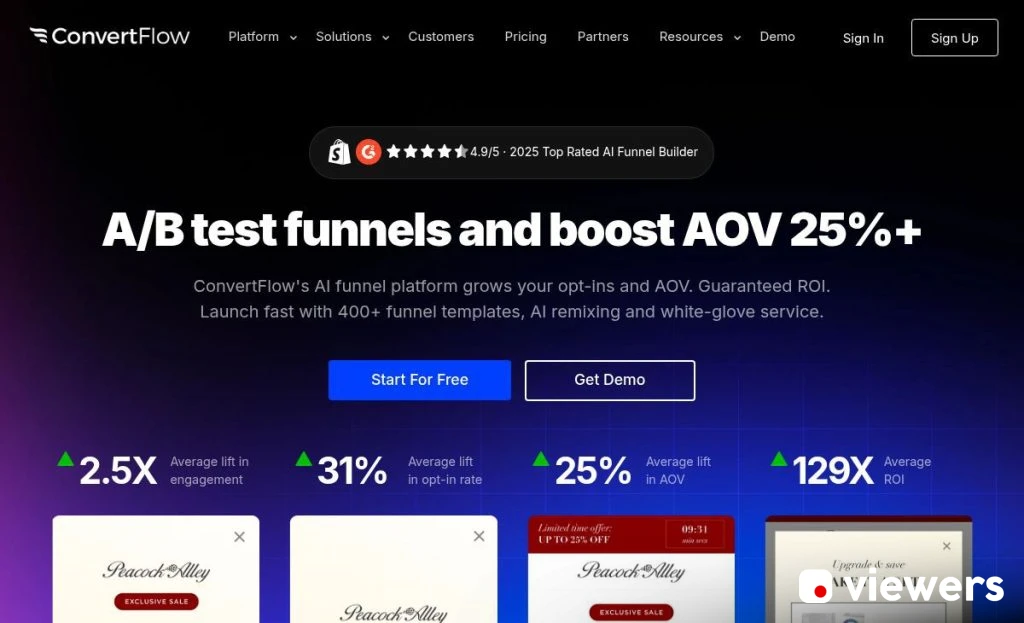
As a more total-marketing-funnel experience, though, their pricing is consequently higher. The free version is very minimal, giving you just lead forms and landing pages. Their pro plans start at $250 per month, and you need the Plus version (for $833 per month) for everything they offer. For that price, though, I’d recommend HubSpot instead.
10: Adoric
Designed for storefront and made to work with Shopify, Adoric is surprisingly fully-featured compared to some of its peers. With a drag-and-drop pop-up builder, you can easily create pops with all sorts of elements and designs, from forms to gamified spinners to multi-step messaging. They also have a couple of interesting and unusual options, like a tooltip pop-up and a custom pop design option.
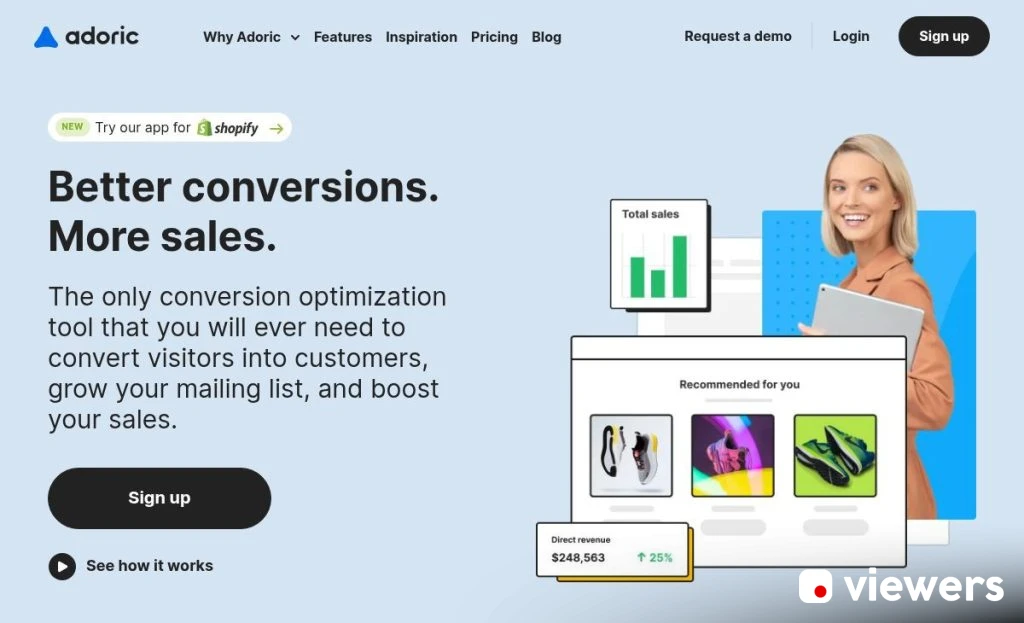
Shopify stores can use the app for $5 per 100 orders in the store per month. Non-Shopify websites start at $100 per month, though their “basic” plan still includes nearly everything and a 300,000 pageview cap. The biggest downside is simply that you don’t get white label pops until you hit the $350/month plan.
11: MailOptin
This one is a hybrid between a pop-up engine and an email newsletter management app. It offers a range of fairly standard options for both the pop-ups and the email management, neither of which excel in their specific field, but coming bundled together is handy.
Pricing starts at about $8 per month, and $24 per month for the version with email automation. You can also spend a flat $999 for a lifetime license.
The one downside is that it’s WordPress-only, though given the prevalence of WordPress, that may not be too much of a hindrance.
12: Plerdy
Plerdy as a company makes a bunch of different useful marketing tools, including analytics, split testing for nearly anything, SEO monitoring, event tracking, and even a heatmap. The pop-up manager is just one of the available tools.
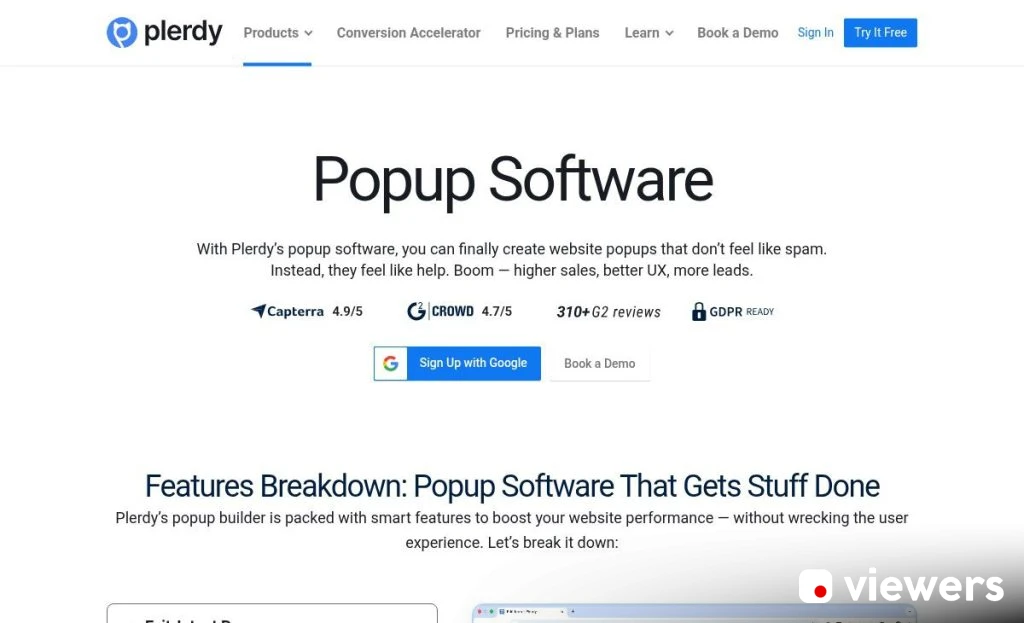
You have two options when buying Plerdy. You can buy a robust package with all of the tools and set limits per price point (starting at $21 per month), or you can get their free forever plan and buy increased view caps for the pop-up, which range from $9/month for 1,000, up to $50/month for 10,000. It’s up to you which version works best, based on how much use you think you’d get out of their other tools.
13: Thrive Leads
Thrive is one of the big names in WordPress products, though they’re as often known for their themes as they are their other plugins. Thrive Leads is their lead-gen plugin, with common form placements like the lightbox, ribbon, and in-content boxes. They also offer a content lock, which none of the others on the list do.
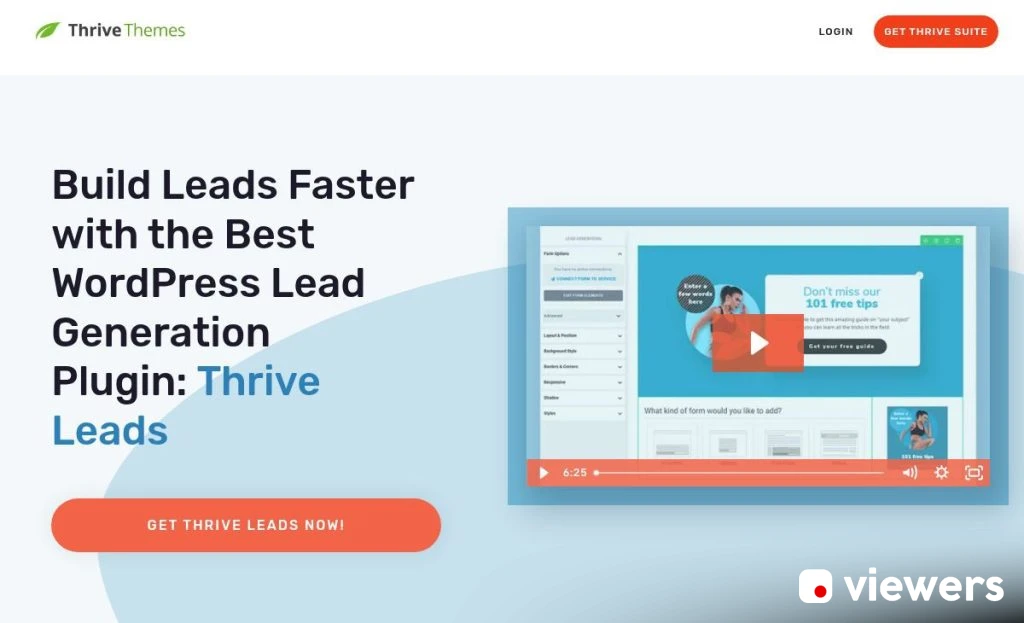
Thrive Leads is $99 per year (not per month), or if you want the full suite of plugins including all eight that Thrive offers, it’s just $300 per year. They’re generally good plugins, but if you don’t plan to use them, stick with just the one.
14: Sleeknote
Sleeknote is pretty par for the course when it comes to a pop-up engine, but it does have one nice feature that the others don’t, which is the option to recommend specific products (based on targeting options) to individual visitors. Targeted recommendations can bring attention to specific products you want to push, while still being relevant to those visitors, and it can work pretty well.
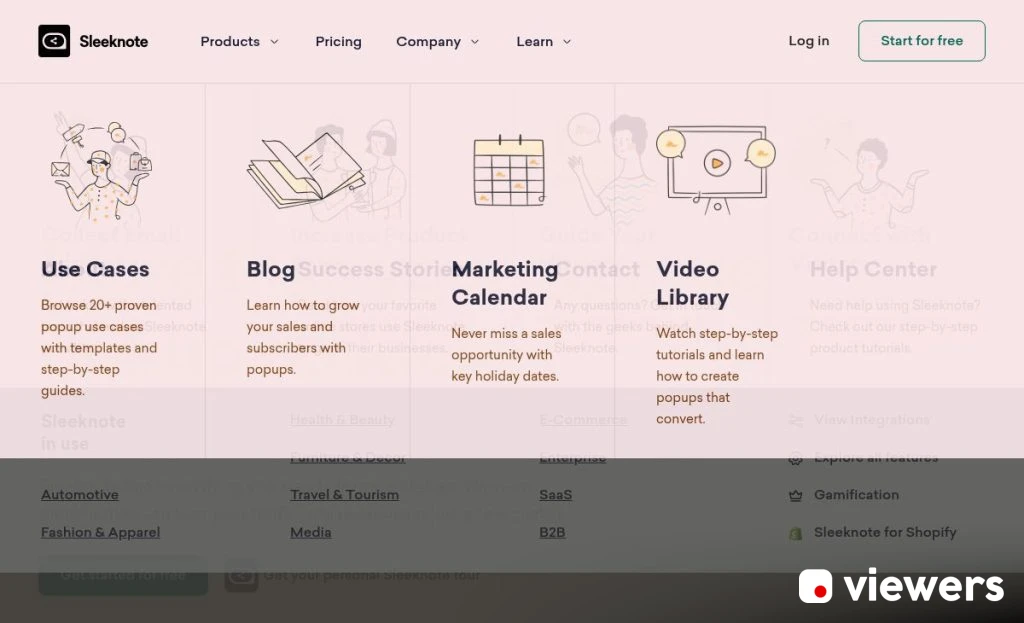
Sleeknote also bills by number of visitors rather than pageviews. Their starter plan is up to 25,000 visitors and costs $55 per month. For gamification options, you need the upgraded plan at $76 per month.
15: OptiMonk
This particular platform has pretty much all the same features you would expect, with list building, cart abandonment, upsell, exit intent, gamified pops, split testing, and all the other features you’re used to seeing by now.
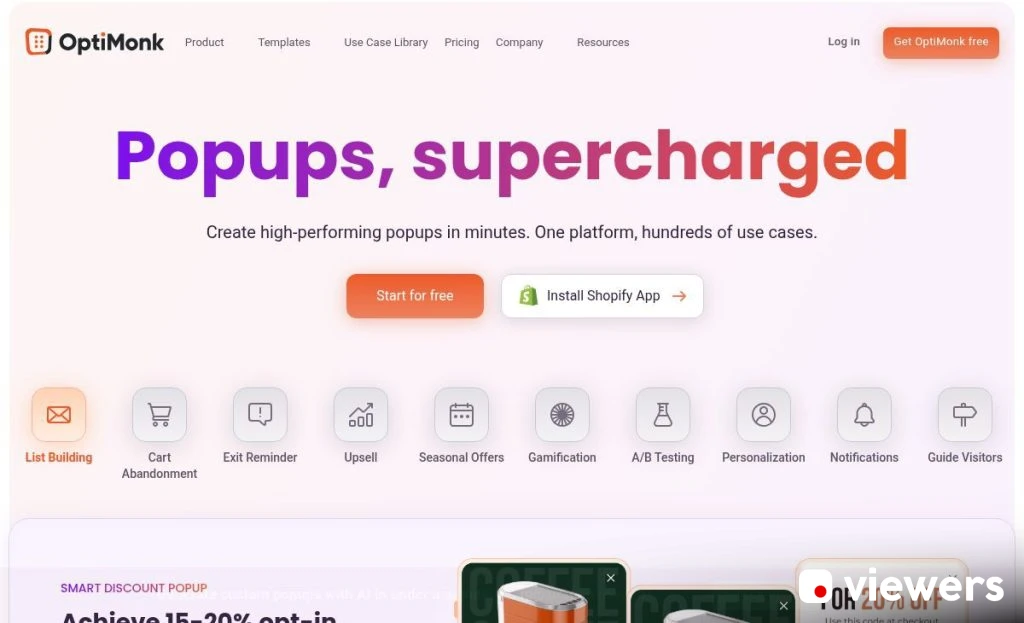
It doesn’t hugely stand out as more effective or unique than others, but it does have a fairly high-cap free plan (10,000 views) and the cheapest plan, at $20 per month, is 20,000 views. You also don’t have to pay even more for white label, any paid plan does it.
Making the Most Out of Your Leads
Any of the pop-up lead generation apps above can get you more leads, but as we all know, more isn’t necessarily better. You need good, qualified leads. That’s where I come in.
With Viewers.com, one line of code turns your email opt-ins into robust leads. Through connections with data partners, we enrich your leads and can give you a full profile for those users, including tons of useful information you can use to fuel more accurate targeting and better outreach.
To see how it works, take the tour, and drop me a line with any questions you may have!


