

Don’t make big decisions cold. Whether it’s buying a product, signing up for a service, or handing over their email address - they need a bit to warm up. They need to feel comfortable, curious, and just a little bit invested before they’re ready to say yes to anything that matters.
That’s where micro-commitments come in. To break it down, a micro-commitment is a small, low-stakes action to take before the big ask. A click. A quiz answer. A free download. An easy checkbox - and each one is easy to say yes to - so easy, in fact, that you don’t do a double take. But those small yeses add up, and by the time your visitor reaches the moment that counts, they’ve already started down a path. They’re no longer a stranger; they’re a person who’s chosen to connect with you, step by step.
The results of getting this right can be significant. Businesses that build micro-commitment sequences into their funnels have reported conversion improvements of anywhere between 20 and 40 percent - not by changing their offer, not by slashing their prices, but simply by rethinking the order in which they ask for things.
What follows is a helpful guide to why micro-commitments work, how to use them, and how to build a sequence that guides your audience from casual visitor to confident buyer - one small “yes” at a time.
Key Takeaways
- Micro-commitments are small, low-stakes actions that warm up visitors before the main ask, improving conversions 20-40%.
- Cialdini’s consistency principle explains why small yeses create psychological momentum, making each following step feel natural.
- Effective sequences use three to five connected steps; too many steps kills momentum and frustrates visitors.
- Micro-commitments work across landing pages, email sequences, webinars, and live sales calls with measurable results per channel.
- The biggest mistake is asking for too much too soon; sequences must feel helpful, not manipulative, to build trust.
The Psychology That Makes Micro-Commitments So Powerful
Robert Cialdini’s research on influence identified something that marketers have been using ever since: people have a deep need to stay consistent with their past choices. Once someone commits to something - even something small - they feel internal pressure to follow through and act in ways that match that commitment.
This isn’t a weakness - it’s how humans build identity and make sense of the world. When you say yes to something, you’ve quietly told yourself something about who you are. Saying no to the next step starts to feel like a contradiction.
That’s where cognitive momentum comes in. Once a person takes a step in a direction, stopping feels more uncomfortable than continuing, and each small action makes the next one easier to take because it fits the story they’re already telling themselves.
Big-box stores let you take a mattress home to sleep on for 100 nights for a reason. The longer you use it, the more it becomes yours in your mind - and returning it starts to feel wrong.

The same principle works in online experiences. A user who clicks a button, answers a question, or signs up for a free tool has already moved. They’ve invested something - even if it’s just a few seconds. That investment pulls them forward.
The data supports this too. One study found that nurtured leads make purchases that are around 47% bigger than non-nurtured ones. That gap doesn’t come from better ads - it comes from a series of small interactions that build trust and create a sense of forward motion over time.
This is what separates conversion strategies that work from ones that just add friction to your funnel.
What Counts as a Micro-Commitment (and What Doesn’t)
Not every small action on your site qualifies as a micro-commitment. The important difference is progression - a true micro-commitment moves one step closer to a buy or sign-up by getting them to invest something, even if that’s just a click.
Consider a quiz that asks “What’s your biggest challenge with X?” That’s a micro-commitment. The user is sharing a preference and mentally leaning in, which builds a sense of personalization. Compare that to a newsletter popup that just says “Subscribe for updates.” That’s a request with no warm-up and no natural next step built in. If you’re exploring better tools for capturing attention, it’s worth looking at some of the best hello bar widget alternatives that support more progressive engagement flows.

An easy way to tell them apart: does this action build a sense of investment in what comes next, or does it just create a job for the visitor to do?
| Action | Micro-Commitment? | Why |
|---|---|---|
| Answering a quiz question | Yes | Creates personal investment and leads naturally to a result |
| Clicking a preference button (“I want X”) | Yes | Small act of self-identification that builds momentum |
| Downloading a freebie | Yes | Triggers reciprocity and signals intent |
| Watching a short video | Yes | Time investment creates psychological buy-in |
| Generic newsletter popup | No | No progression, no personalization, no next step |
| Basic contact form | No | A task to complete, not a step in a journey |
Look at the forms and flows you already have in place. Do they guide visitors through a sequence that feels like it’s going somewhere, or do they just ask for information and leave visitors to figure out the rest on their own? If you’re unsure how to improve your setup, feel free to reach out to our support team for guidance.
How to Map Out a Micro-Commitment Sequence for Your Funnel
Now that you know what an actual micro-commitment looks like, the next step is to arrange them in the right order. A sequence moves forward and it doesn’t make them feel pushed, and that takes a little planning.
Start with your end goal. What do you actually want? A sign up, a booked call, a purchase? Once you have that pinned down, work backward. Ask yourself what a person would need to agree to just before that final step, then what would need to come before that, and so on.
Three to five steps is the sweet spot. Go past five and people start to lose patience, and that’s also the case on landing pages where attention drops fast, and each step should feel like a natural extension of the last one, not a new demand.
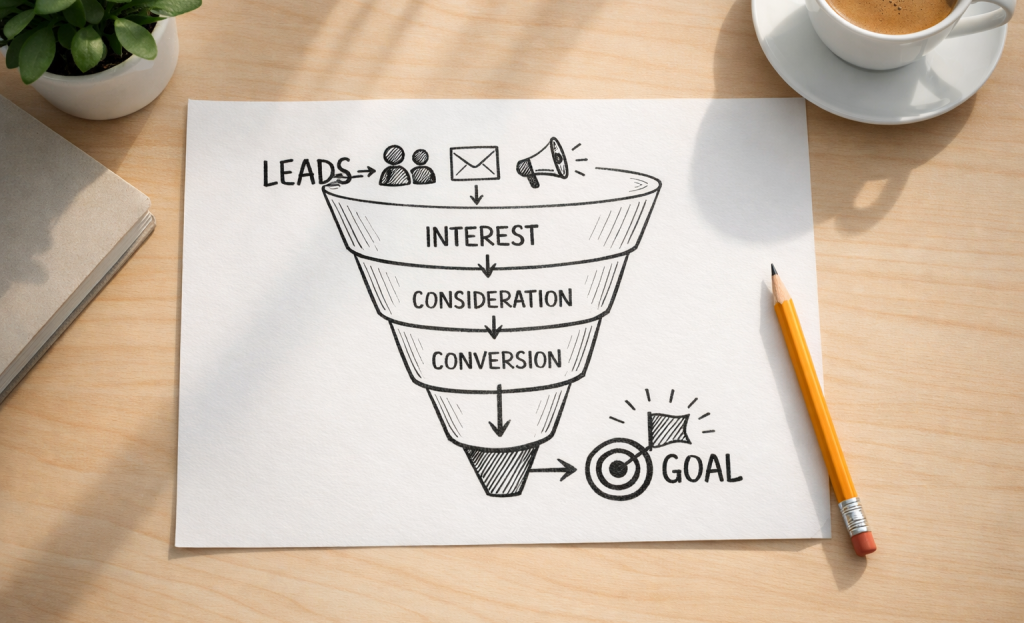
A SaaS company replaced a standard email capture form with a short quiz that asked users two quick questions first, then prompted them to enter their email to see their results. That small change drove a 52% increase in conversions on that page. The quiz worked because the email ask came after users had already invested a little time, so saying yes felt natural.
The sequence worked because each step had a connection to the next one. The questions were relevant, the payoff felt worth it, and the email request came at a point when they were already involved.
When you map your own sequence, write out every step and ask yourself if it earns the next one. If a step feels disconnected or jumps too far ahead, it will break the flow and people will drop off. Keep the logic tight and the asks small, and the path to conversion will feel far less like a hurdle.
Where to Apply Micro-Commitments Across Your Marketing Channels
Once you have a sequence mapped out, the next step is to match each micro-commitment to the right channel. Not every touchpoint works the same way, and placing the wrong ask in the wrong place tends to kill momentum instead of build it.
Landing pages are one of the most direct places to start. A single low-friction action - like answering a one-question quiz or clicking to show pricing - lets you engage visitors before you ask for their email. That small act of engagement makes the next step feel like a natural continuation instead of a cold request.

Email sequences work well for slowly increasing commitment over time. You might start by asking them to click a link to see a result, then later ask them to reply with a quick answer, and eventually invite them to book a call - each email builds on the last one.
Webinars are especially strong for this. Asking attendees to type an answer in the chat, vote in a poll, or claim a resource during the session gives you a rhythm of small yeses. That rhythm translates directly into action - data from webinar-based funnels has shown a 37% increase in trial sign-ups and a 28% increase in demo bookings when micro-commitments are built into the session flow.
| Channel | Best Micro-Commitment Type | Expected Outcome |
|---|---|---|
| Landing Page | Quiz, click-to-reveal, single question | Higher opt-in rate |
| Email Sequence | Click, reply, short response | Warmer leads by the final email |
| Webinar | Chat prompts, polls, resource claims | More trial and demo conversions |
| Sales Call | Verbal agreement, small decisions | Smoother close with less resistance |
Look at this table and see which channel you already use most. That is your best starting point.
Micro-Commitments in Sales Conversations and Demo Calls
Live sales conversations work differently from an online funnel. There’s no anonymous clicking - an actual person is on the other end, and the pressure to stay consistent with what they’ve already said out loud is much stronger than it is behind a screen.
Most sales scripts skip this entirely. They jump straight to pitching features and functionality and then ask for the close at the end, which puts the weight on one big choice; it’s a bit much to ask of a person who hasn’t been walked through a series of smaller agreements first.
The fix is to build small verbal commitments into the conversation as you go. Ask questions that get a natural “yes” - things like “Does that match what you’re running into?” or “Does it make sense to take a look at how this part works?” These aren’t tricks. They’re a way to make sure that the prospect is with you at each stage instead of nodding politely while mentally checking out.

Micro-commitments can also lock in next steps in real time. Instead of ending a demo with “I’ll send you some info,” confirm a follow-up action together before the call ends. Agreeing on a date to loop in a decision-maker makes the next step feel like a plan instead of a maybe.
Sales teams that train on this incremental commitment-building have seen results. One commonly cited example points to a 23% increase in demo-to-close rates after teams restructured their call frameworks around progressive agreement.
The reason it works particularly well in person is that people feel more accountable to words they’ve spoken out loud. Breaking consistency in a live conversation feels awkward in a way that closing a browser tab does not.
Common Mistakes That Kill Your Micro-Commitment Strategy
Even with a good structure in place, a few missteps can derail the whole thing. These mistakes are easy to fix once you know what to look for.
The most common problem is asking for too much too soon. If someone has just landed on your page or just heard your pitch, asking them to book a call or start a trial is a big jump. You need to earn that ask by building trust slowly.
Here are the patterns that break a micro-commitment sequence:

- Skipping early steps and jumping straight to a high-stakes request
- Adding too many steps so the sequence drags on and loses momentum
- Using the same sequence for cold audiences and warm leads
- Framing each step in a way that feels pushy rather than helpful
The sequence length matters more than you might expect. Three to five steps tends to work well - enough to build trust, but not so many that people feel herded.
The audience mismatch is a quieter mistake but just as damaging. Someone who already knows your product doesn’t need the same warm-up as a first-time visitor. A long beginner sequence can erode their trust instead of building it.
The bigger danger is making the whole thing feel manipulative. There’s a real difference between guiding someone toward a choice and backing them into a corner. The first is a natural progression. The second is a trap - and people can see it.
If your micro-commitments are designed to get what you want instead of to help the reader take a step that’s right for them, the sequence will feel off. Trust is easy to lose and slow to rebuild.
How to Test and Measure Whether Your Micro-Commitments Are Working
The best way to know if your micro-commitment sequence is working is to track each step. You want to see how many people move from one step to the next, where they drop off, and what your final conversion rate looks like at the end.
Test one step at a time. Pick one step, run an A/B test on it, and let the data tell you what to change - this keeps things manageable and makes it easier to know what caused any improvement you see.
A 20-40% lift in conversions is a typical outcome from a well-tested sequence. That range depends heavily on how much you iterate and how closely you look at the numbers at each stage.

Here is an easy way to frame what you should be tracking, what a red flag looks like, and what a healthy benchmark looks like.
| What to Measure | Red Flag | Healthy Benchmark |
|---|---|---|
| Step progression rate | Less than 40% move to the next step | 60-80% continue forward |
| Drop-off point | Most users leave at the same step | Drop-off is spread across steps |
| Final conversion rate | No improvement after 2+ test cycles | Steady upward trend over time |
| Time to complete sequence | Users stall or abandon mid-flow | Smooth and consistent pacing |
If one step is losing users, that’s your priority to fix before touching anything else. Small changes to a single step can have a big ripple effect on everything that follows it.
Start Small, Win Big - Your Next Steps With Micro-Commitments
The compounding effect of small steps is real. A low-stakes try-in can create an engaged subscriber. An engaged subscriber can become a buyer. A buyer, nurtured correctly, can become a loyal advocate. None of that happens with a single giant leap - it happens because you made each step feel easy enough to take.

Your next step is to pick one place in your funnel this week and test a micro-commitment sequence. It doesn’t have to be an overhaul. Swap a high-pressure CTA for a softer entry point. Add a quick win to give your audience an early taste of value. Watch your numbers. Small experiments compound too.
Before you close this tab, ask yourself - where in your current process are you asking for too much too soon? That’s usually where the conversions are quietly slipping away, and where a well-placed micro-commitment can change everything.
FAQs
What is a micro-commitment?
A micro-commitment is a small, low-stakes action taken before a major ask, such as answering a quiz, clicking a button, or downloading a freebie. These small steps build psychological momentum, making visitors more likely to complete a final conversion action.
Why do micro-commitments improve conversion rates?
Cialdini’s consistency principle shows people feel compelled to stay aligned with past choices. Once someone takes a small action, continuing feels natural, while stopping feels inconsistent - driving them forward through your funnel.
How many steps should a micro-commitment sequence have?
Three to five steps is the ideal range. Fewer steps may not build enough momentum, while more than five can frustrate visitors and cause them to abandon the sequence before reaching your main conversion goal.
Where can micro-commitments be used in marketing?
Micro-commitments work across landing pages, email sequences, webinars, and live sales calls. Each channel supports different commitment types, such as quizzes on landing pages or chat polls during webinars.
What mistakes should I avoid with micro-commitments?
The biggest mistake is asking for too much too soon. Other pitfalls include using too many steps, mismatching sequences for cold versus warm audiences, and framing steps in ways that feel pushy or manipulative rather than genuinely helpful.