

Most landing pages are built to cast a wide net. One page, one message, everyone gets the same experience regardless of where they came from, what they do for a living, or what stage of the buying process they are in. That strategy might pull in volume. But volume without fit is noise. A small business owner clicking an ad has different needs than a business procurement manager clicking the same ad. Sending them to the same generic page and expecting the same result is optimistic at best.
Segmented landing pages solve this by customizing the experience to the visitor instead of forcing the visitor to adapt to a one-size-fits-all page. When someone lands on a page that speaks directly to their situation - their industry, their role, their pain point - they are far more likely to engage, trust what they are reading, and take action. The result is not just more leads, but leads that actually make sense for your business.
I'll walk through how to build segmented landing pages that do that. You will learn how to find the right segments for your audience, structure pages that convert, and measure what is actually working so you can improve over time. The goal is not a bigger pile of leads - it's a better one.
Key Takeaways
- Segmented landing pages match content to specific visitors, naturally filtering out poor-fit leads and improving overall lead quality.
- Define segments before building pages; useful dimensions include industry, job role, buying stage, traffic source, and problem type.
- Form length should match audience tolerance - early-stage visitors need fewer fields; enterprise buyers accept longer forms.
- Routing matters as much as page design; paid ads, email lists, and UTM tracking help send the right visitors to matching pages.
- Conversion rate alone is misleading - track downstream metrics like sales-qualified lead rate and deal close rate by page source.
What Makes a Landing Page "Segmented" and Why It Matters for Lead Quality
A segmented landing page is built with one audience, funnel stage, or traffic source in mind - and everything on it aligns with that focus, from the headline to the call to action.
A generic landing page tries to speak to everyone, which means it connects with no one. When a visitor lands on a page that doesn't match their situation or intent, they either leave or fill out your form anyway - and a lead who was never the right fit doesn't do much for your pipeline.
Specificity changes how visitors respond. When someone lands on a page that was written for them, they are more likely to engage and convert. And the wrong visitors are less likely to convert at all, which is a good thing for lead quality.

HubSpot found that businesses with 10 to 15 landing pages generate 55% more leads than those with fewer than 10. More pages alone don't explain that gap - relevance does, and each extra page is a chance to speak directly to a different segment instead of forcing everyone through the same experience.
When your page content matches what a visitor already believes they need, they self-select. People who aren't a fit tend to bounce, and those who are a fit tend to convert. That natural filtering is what pushes lead quality up without you having to manually screen every submission.
Segmentation can happen across a few dimensions. A page might target a specific industry, a buyer at a particular stage of the decision process, or visitors who came from a paid ad versus an organic search - and each of those contexts calls for different messaging, different proof points, and a different ask.
How to Define Your Audience Segments Before Building a Single Page
Before you open a page builder, you'll have to know who you're building for. That sounds easy. But marketers skip this step and end up with segments that are either too large to be helpful or so like each other that they barely justify separate pages.
Start by asking what a qualified lead actually looks like for your business. The answer will be different depending on what you sell, so there's no universal checklist here. A B2B SaaS company might define a qualified lead by company size and job title. But a consultancy might care about buying stage and budget. That definition is the foundation everything else gets built on.
From there, you can start to map out your segments. The most helpful ways to split an audience are by industry, job role, traffic source, buying stage, or the problem they're trying to fix. You don't need to use these all at once - pick the dimensions that actually change how someone thinks about your product.
One helpful exercise is to check if your segments would respond differently to the same headline. If the answer is no, those groups probably don't need separate pages. If the answer is yes, that's a segment worth building for.
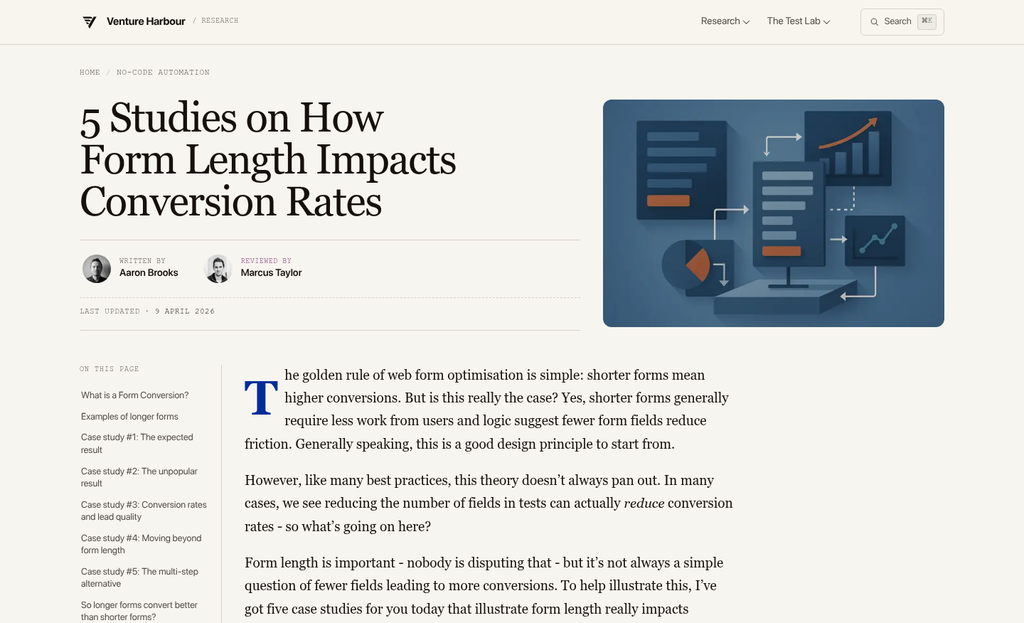
It's also worth thinking about how to collect segment data without hurting your conversion rate. A job-title field on a form tends to cut back on conversions by around 3%. But the leads who do convert show roughly 18% higher quality scores; it's intentional friction - you lose a little volume to gain relevance. The trade-off makes sense only if a qualified lead is worth enough to justify it.
Get your segments mapped out on paper first. Know who each page is for, what their situation is, and why they're different from the other groups.
The Core Elements Every Segmented Landing Page Needs to Get Right
Once your segments are defined, the page itself has to do the heavy lifting. Every element needs to speak to one person - not a large category of people. But the person you had in mind when you built that segment.
Start with the headline - it should name the problem or goal that matters to that segment. A CFO looking at compliance software and a startup founder looking at the same product have different goals, so two identical headlines will fail one of them every time.
The copy that follows should stay in that lane. Connect the product to results that segment actually cares about and use the language they use to describe their own situation. If you wrote segment profiles in the last step, this is where those notes pay off.
Getting the form length right
HubSpot's analysis of over 40,000 landing pages found that conversion rates fall as the number of form fields goes up. But that finding needs context to be helpful. A page targeting early-stage browsers should ask for as little as possible - probably just a name and email - because those visitors have low commitment and high hesitation.
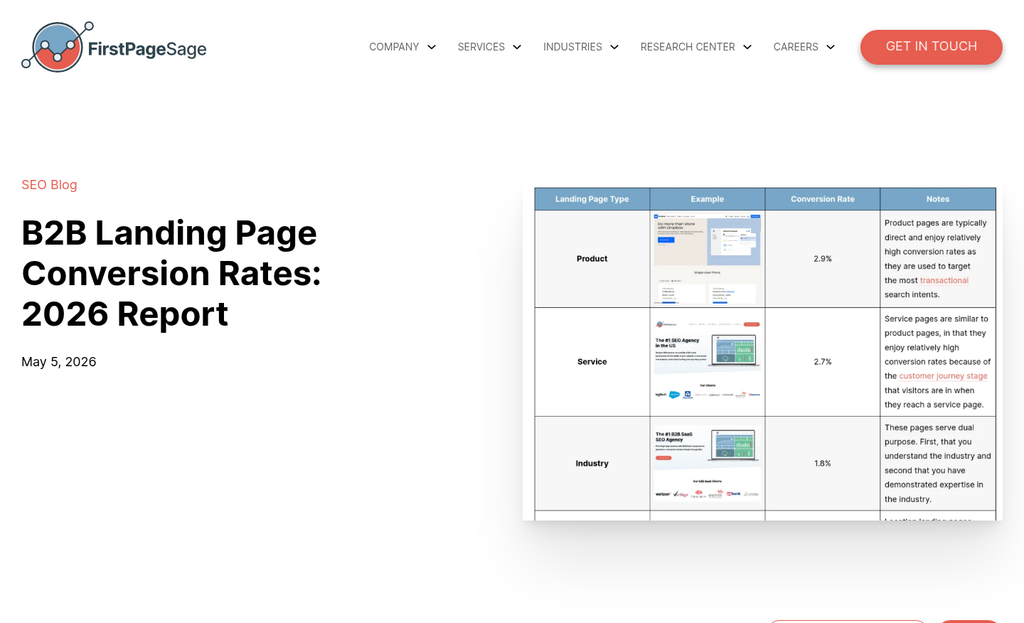
Enterprise buyers are a different story. They expect a more involved process and are less put off by a longer form because they understand the relationship they're entering into. The right form length is about matching the audience's tolerance to where they are in their choice process.
One offer, one action
Each page should have a single focused call to action with one relevant offer. Giving visitors multiple paths is one of the fastest ways to cut back on conversions because it creates friction where you want momentum. Reducing cognitive load is key to keeping visitors moving forward.
The offer itself has to earn the ask. A free checklist might land well for someone in research mode. But a demo request fits a person who already knows what they want. Match the offer to the intent of the segment and the rest of the page will feel natural.
Routing the Right Traffic to the Right Segmented Page
Building segmented pages is only half the job. The other half is making sure that the right visitors actually land on them, because a page built for business buyers won't do much for a first-time visitor who found you through a blog post.
Paid ads are the most direct way to control this. When you build an ad campaign around an audience, you choose where that click goes. A LinkedIn ad targeting HR directors should go to a page written for HR directors - not your general homepage. Audience targeting and landing page design need to work together as one unit.
Email is just as controllable. If you have a segmented list, you can send each group to a page that matches where they are in the buying process. A subscriber who downloaded a beginner's guide should have a different destination than a person who already attended a product demo. The link does the routing.
UTM parameters give you a way to track which source sent which visitor, and you can use that data to trigger different page experiences or just to know what's working. They're not hard to set up and they pay off faster when you're running multiple campaigns at once.
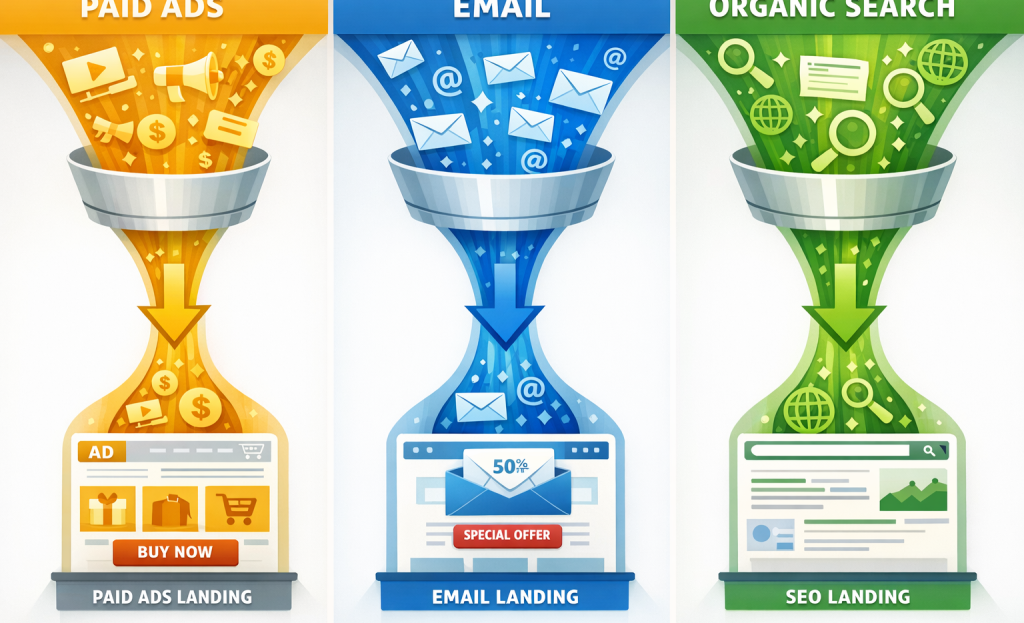
Here's a common problem worth naming: about 48% of marketers build a new landing page for each campaign, but still send mixed traffic to them. The pages are out there, the segments are out there, but the routing is loose - and that's where the work falls apart.
Organic traffic is harder to control since you can't always predict who searches what. But you can use internal links, pop-ups, or on-page funnels to redirect visitors toward a page that fits them better once they've arrived.
Each channel has its own logic, and the routing strategy needs to match that. Paid, email, and organic each bring different visitors with different levels of intent.
How to Test Segmented Pages and Know When One Is Actually Working
Only 17% of marketers actively test their landing pages, and that's a shame because those who do see around 37% better conversion rates. The good news is that testing a segmented page is easier than testing a generic one, because your audience is already more defined - you're not guessing who you're talking to.
With a segmented page, you can run tighter tests because the variables are smaller. Focus on four things: the headline, the form length, how you frame the value in front of the visitor, and the CTA copy. Test one ingredient at a time and give each version enough traffic to draw a conclusion - a few dozen conversions at minimum.
Most skip the part that matters most: conversion rate is not the finish line.
A page that converts at 8% sounds great until you check the CRM and find that most of the leads were never going to buy. A page converting at 4% could be the better performer if it brings in sales-qualified leads who actually close. The number that matters most is what happens to those leads after they fill out the form.
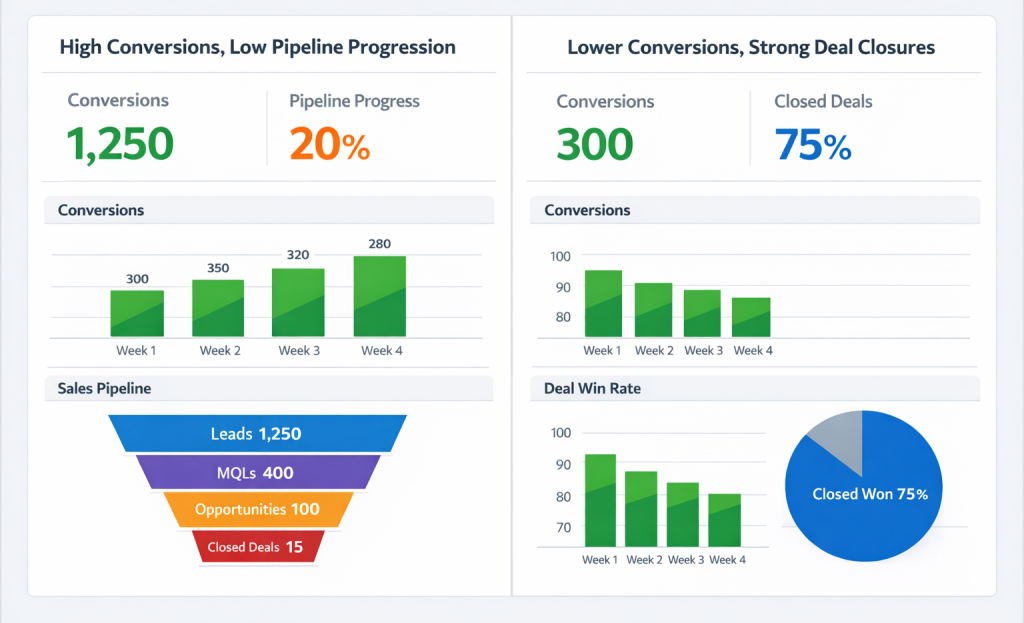
That means you'll have to track downstream. Connect your landing page data to your sales pipeline and look at metrics like sales-qualified lead rate and deal close rate by page source. Most CRMs and attribution tools make this possible to set up without a developer.
| Metric | What It Tells You |
|---|---|
| Conversion rate | How many visitors fill out the form |
| Sales-qualified lead rate | How many of those leads are worth pursuing |
| Deal close rate by page | Which pages actually bring in revenue |
When you start measuring lead quality alongside volume, you get a more honest picture of what your segmented pages are doing for the business.
Stop Chasing Leads - Start Attracting the Right Ones
You don't need dozens of pages to get started. Pick two or three segments that matter most to your business - maybe it's industry, buying stage, or traffic source - and build tightly focused pages for each one. Measure what changes. Let the data tell you where to go next. A small number of well-built, well-targeted pages will usually outperform a large library of generic ones.
A helpful place to start: pull up one of your existing landing pages and ask yourself if it would convert better if it spoke to a narrower audience. If the answer is yes, you already know your next move. Build with intention there and the quality of your leads will follow.
FAQs
What is a segmented landing page?
A segmented landing page is built for one specific audience, funnel stage, or traffic source, with every element - headline, copy, and call to action - aligned to that focus rather than trying to appeal to everyone.
How do segmented landing pages improve lead quality?
By speaking directly to a specific visitor's situation, segmented pages naturally filter out poor-fit leads. The right visitors are more likely to convert, while unqualified visitors tend to bounce, improving overall lead quality without manual screening.
How should I define my audience segments?
Start by defining what a qualified lead looks like for your business, then split your audience by dimensions like industry, job role, buying stage, traffic source, or problem type - but only where those differences would meaningfully change your messaging.
How long should forms on segmented landing pages be?
Match form length to audience tolerance. Early-stage visitors convert better with fewer fields, while enterprise buyers accept longer forms because they understand the process. The right length depends on where your visitor is in their decision journey.
What metrics should I track beyond conversion rate?
Track downstream metrics like sales-qualified lead rate and deal close rate by page source. A lower-converting page that brings in buyers who close is more valuable than a high-converting page full of leads that never purchase.


